

What's in Bloom? A Month-by-Month Guide to the Island's Flowers
05/04/2026
One of the most spectacular features of Nantucket is its seasonal blooms, with each month bringing a new palette of color to the island. Whether you're a gardener, photographer, or traveler planning the perfect visit, here's your guide to what's blossoming throughout the year on-island.
March: Early Signs of Spring
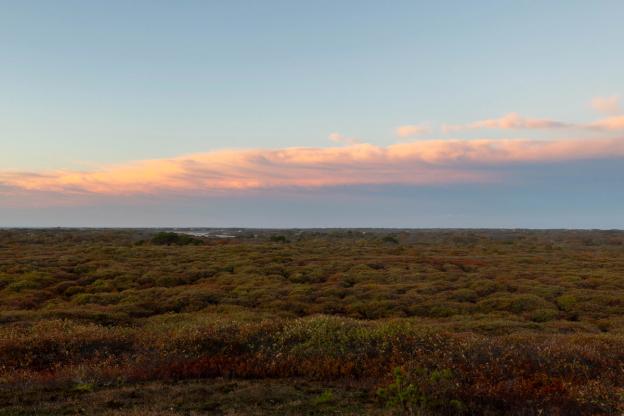
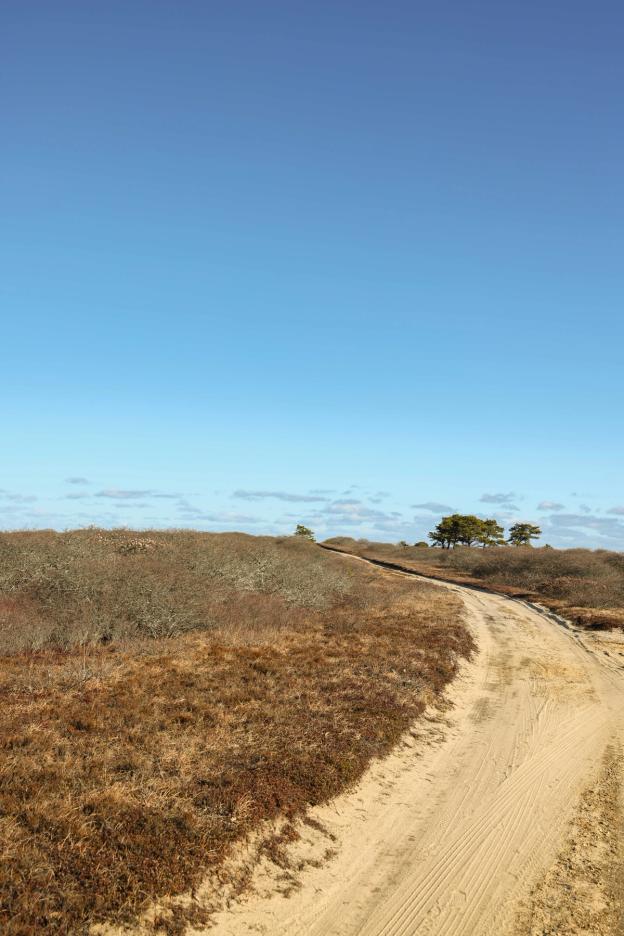
While the March landscape is still chilly and muted on the island, a few plants brave the cold and begin to wake up. One of these plants, called the broom crowberry, grows in the low and open areas of the middle moors, and alongside dirt roads. This plant is relatively nondescript and small, and you've most likely seen it in the moors without even realizing! It appears in large groups, or monocultures, and is a reddish mounded plant.
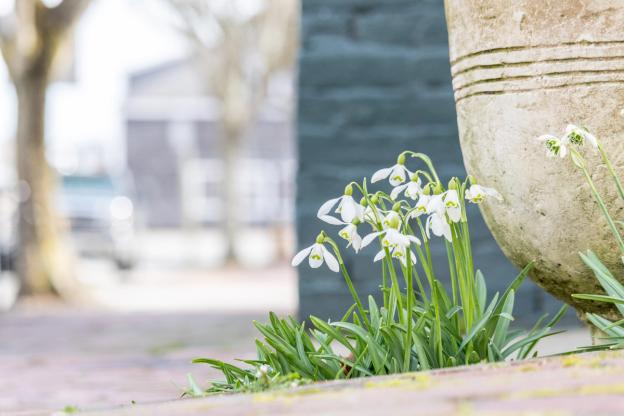
Another plant that's a lovely early sign of spring on the island is the snowdrop. These small, hardy plants often begin poking through the bare ground in March, and can be found in sheltered sunny spots. They are characterized by nodding white flowers with green markings, and a long skinny stem that's grayish-green.
April: Daffodil Season Takes Over
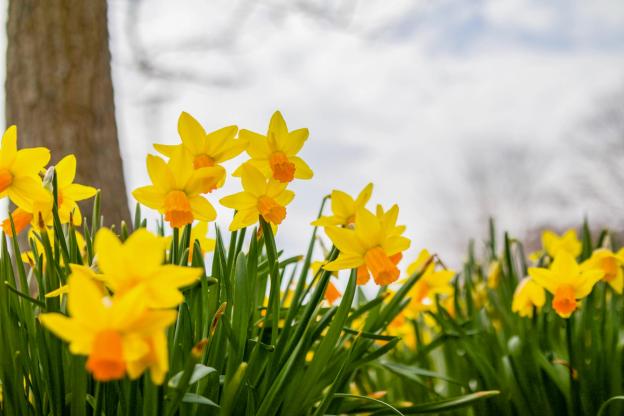
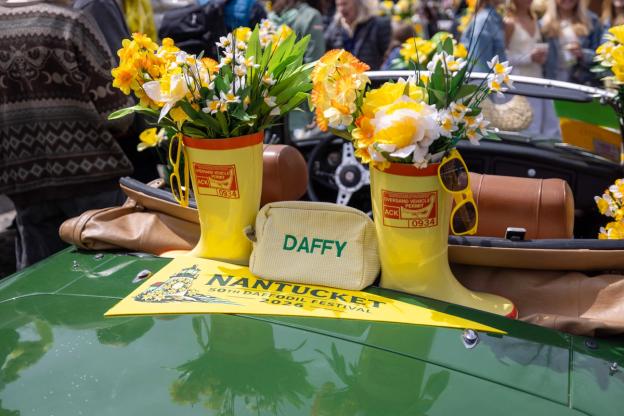
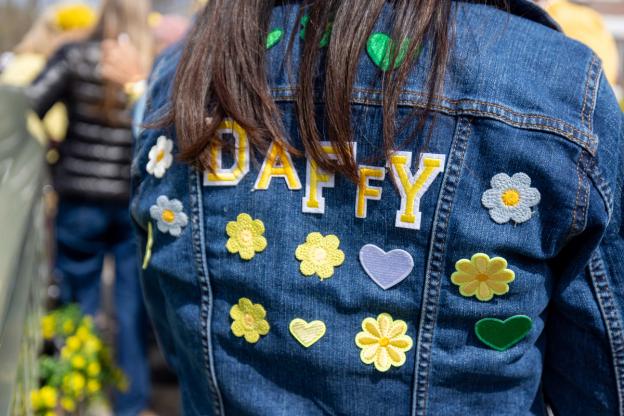
April on Nantucket is known for its daffodils, and is capped off by the popular annual Daffodil Festival at the end of the month. Thousands of these cheerful yellow, white, and multi-colored trumpet-shaped blooms line roadsides, meadows, and private gardens, marking the end of winter. Since daffodils are toxic to deer, these flowers are able to hang around the whole month, and are on full display for the festival, which features an antique car parade, picnics, festive outfits, and a flower show, all revolving around it's main theme - daffodils!
May: The Island Turns Pastel
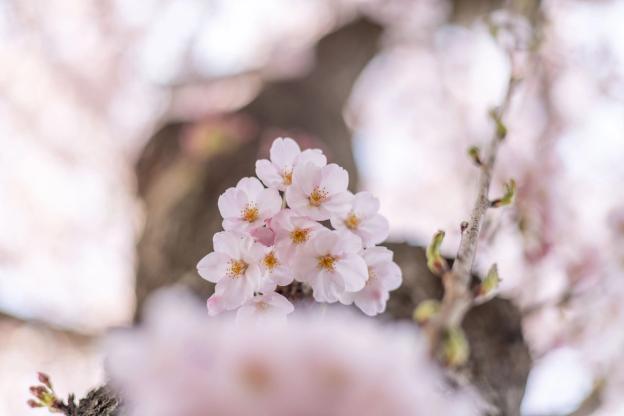
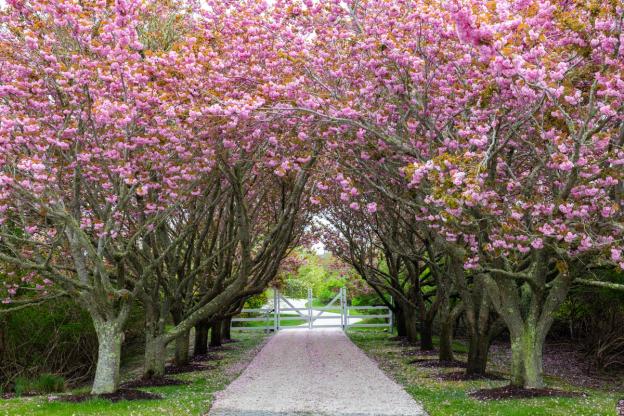
Nantucket's cherry blossom trees transform the island in May, creating a picturesque scene of light pink and white flowers. These trees can be found all over the island, especially in places like South Water Street, where they line a small portion of the road. The beauty of these colorful petals is often short-lived however, due to rain and wind on the island, which causes the petals to fall from the tree, leaving behind a pink confetti on the ground.
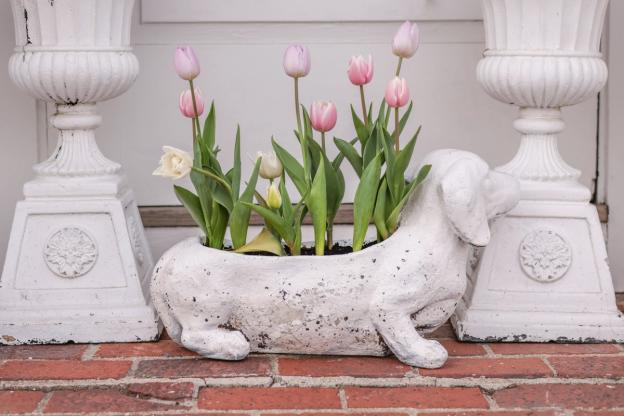
Brightening gardens and downtown planters with shades of pink, yellow, red, white, and purple, tulips are one of the flowers that take center stage in May. Nantucket flower farms grow specialty tulips, providing fresh bouquets to the island community. People also choose to grow tulips in their own gardens (having planted the bulbs in the fall or winter), though netting is recommended since deer and rodents love to eat this colorful flower!
Beach plum shrubs typically bloom in early May, displaying clusters of white flowers before their leaves fully emerge. This species of plum is abundant on Cape Cod, Martha's Vineyard, and Nantucket, producing small tart purple fruit in late summer (August-September). Although many islanders keep their beach plum picking spots top secret, some people recommend walking down Surfside Road or Polpis Road to find them. They tend to be off the beaten path!
Typically from mid-May until the beginning of June, lilacs burst into fragrant blooms, filling streets with purple and white flowers. Although bloom times can shift slightly with the weather, the timing normally coincides with Figawi Weekend and Memorial Day.
June: Roses and Wildflowers
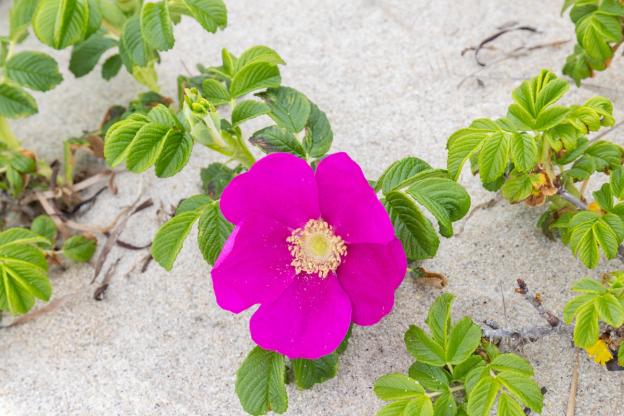
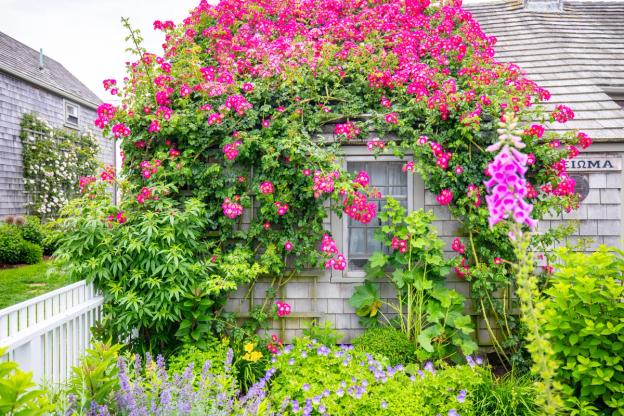
June on the island is known for being abundant and romantic when it comes to flowers. The iconic Nantucket beach rose, also known as the Rugosa rose, is a hardy and fragrant shrub that explodes in pink and white along beach dunes and pathways. It was introduced to Nantucket around 1899, and has become a beloved symbol of the island's coast, especially around areas like Steps Beach and Sconset.
Peonies add a vibrant, fragrant elegance to gardens and island homes, blooming in classic shades like blush, pink, white, red, and coral, but also in unique hues like deep burgundy, soft salmon, creamy yellows, and purple. On Nantucket, different types of peonies bloom at different times, with tree peonies first (April/May), followed by herbaceous (Memorial Day to Solstice), creating a succession of colors for weeks.
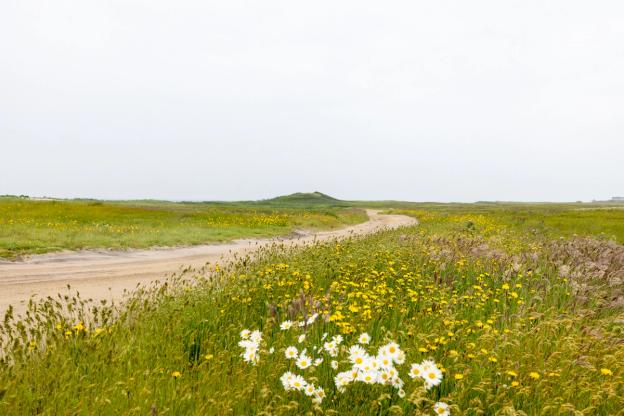
Especially at places like Sanford Farm and Ram Pasture, wildflowers begin to fill the meadows in June. Some common wildflowers found on the island during this time are the sandplain blue-eyed grass (tiny purple-blue flowers with yellow centers), the Nantucket shadbush (creamy white flowers on a small shrub), wood lilies (striking orange blooms), the bushy rockrose (low-growing with buttery yellow petals), golden heathers (carpeting the moors with gold), and arrowwood (creamy white flowers in clusters).
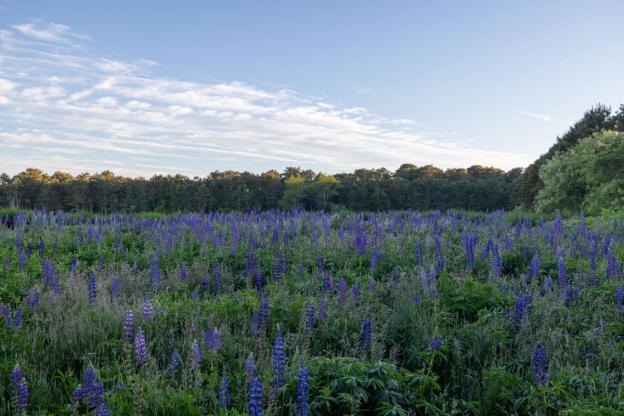
Two other flowers worth mentioning when it comes to the month of June are lupines, which create a vibrant purple landscape, especially in areas near Miacomet Pond, Lost Farm, and Gardener Farm, as well as daylilles, which thrive as hardy, low-maintenance perennials that can be found in many gardens and roadsides. The most common color of daylilies seen on Nantucket seems to be orange, though the flower can also be found in shades of yellow, purple, and red.
July: Hydrangea Heaven
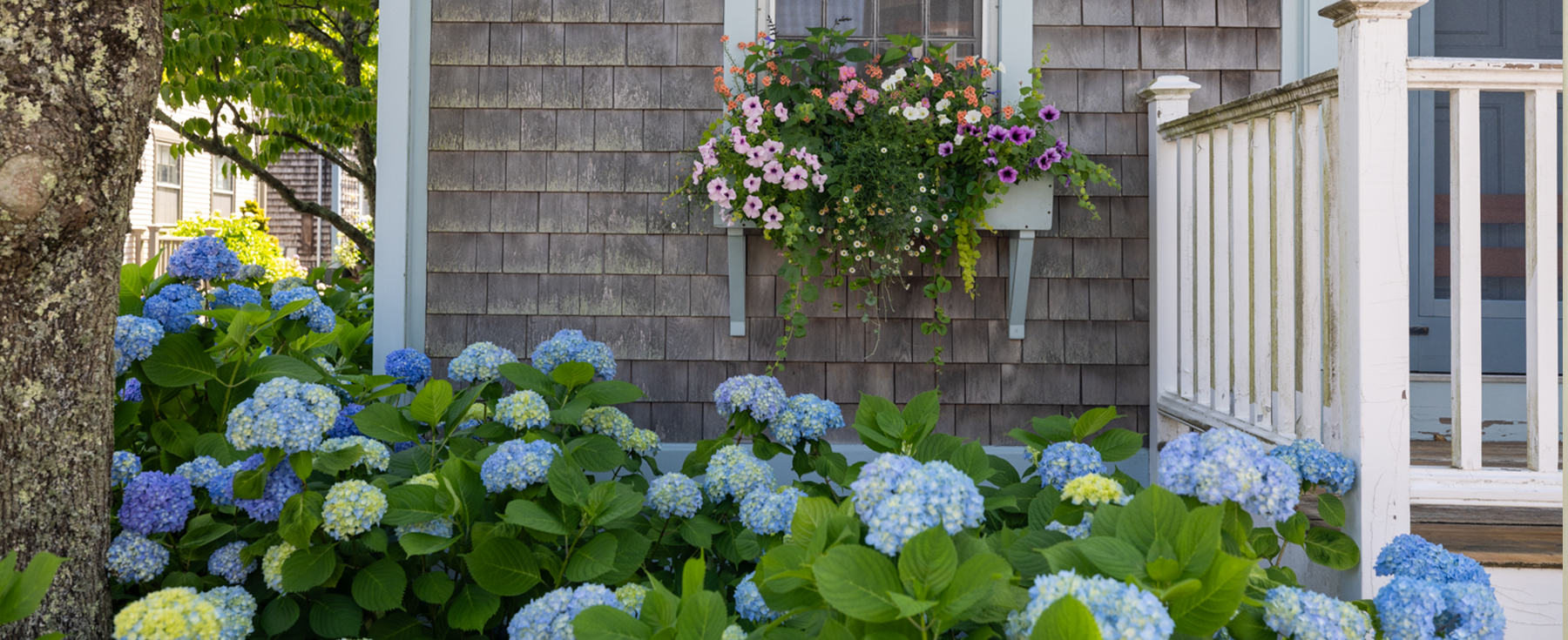
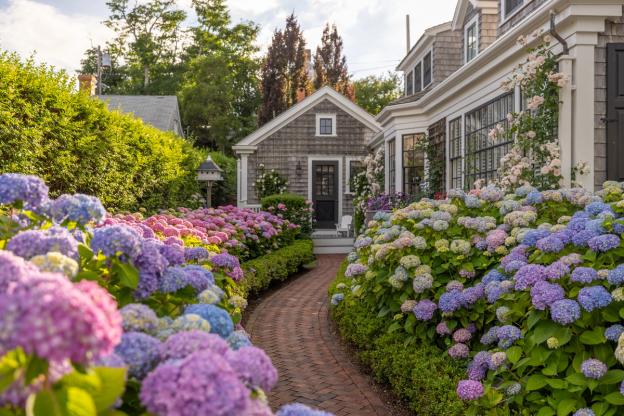
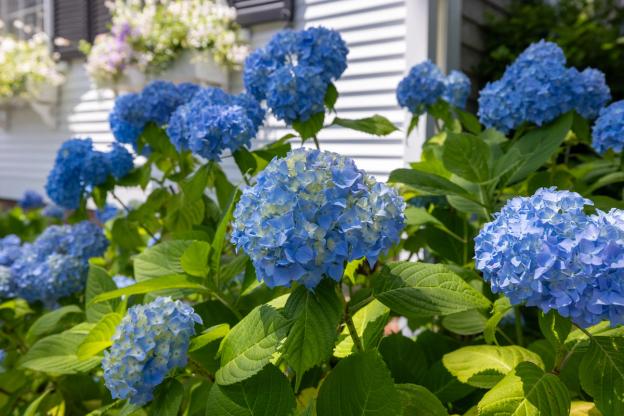
When people think of Nantucket, hydrangeas are often one of the first things that come to your mind. The hydrangea is a signature story-book Nantucket, with people even planning their trips to the island based around when hydrangeas are in bloom. These beautiful flowers can be found in shades of pink, blue, purple, and white in yards, hotels, cottages, and seaside fences. There's even a variety of hydrangeas sold throughout the country known as the "Nantucket Blue Hydrangea", which is known for its large flowers that are deep blue in acidic soil but pink in alkaline conditions.
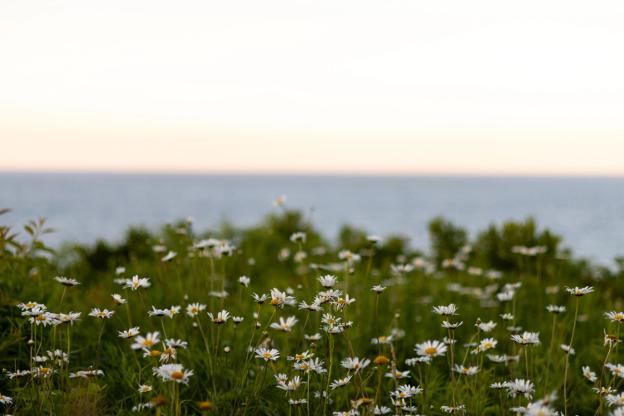
Although hydrangeas tend to take the spotlight in July, there are certainly other flowers that add to the beauty of the island throughout the month. This includes shasta daisies, which have crisp white blooms that thrive in the classic green and white "Nantucket style" garden; coreopsis, which offer bright, daisy-like yellow blooms; coneflowers, a vibrant pink/purple flower that attracts butterflies and bees; and black-eyed susans, which are a great deer-resistant option for island gardeners. Milkweed also blooms in a variety of colors in July, and is crucial for Monarch butterflies.
One of the first fruits to ripen in July is the lowbush blueberry, which produces berries much smaller than the ones you would buy at the grocery store, but often sweeter! These berry bushes can be found in abundance along the south shore, at spots like Madaquesham, Smooth Hummocks, Ram Pasture, Head of the Plains, and near Altar Rock in the middle moors.
August: High Summer Color
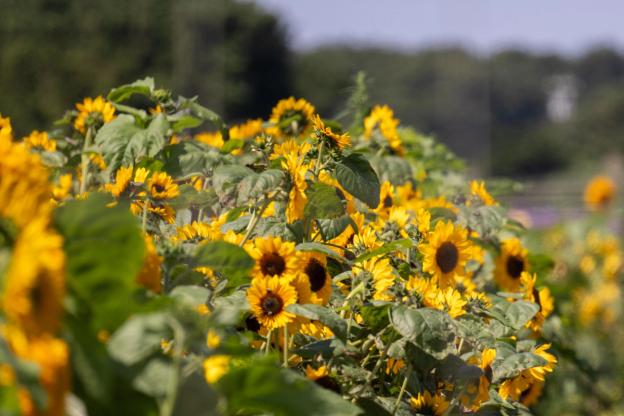
As visitors come and go, the island remains lush and vibrant throughout the month of August. Sunflowers bloom in fields and farmstands, in both the woodland variety and the rough leaved variety. Popular spots to pick up some fresh sunflowers include Bartlett's Farm, Moors End Farm, Fleur Nantucket, and Harvest Garden.
Goldenrod (especially the salt-tolerant seaside goldenrod) is abundant on Nantucket, lighting up dunes, beaches, moors, and other sandy areas with its bright yellow flowers. There's estimated to be between 14 and 20 different species/varieties of goldenrod around the island, which are able to thrive thanks to Nantucket's sunny spots with well-drained, dry soils.
A common, beautiful wildflower found all over Nantucket's fields and roadsides is known as Queen Anne's Lace. This flower is know for its white, flat-topped flower clusters, and its stem's carrot-like scent. The root of the flower is actually edible, but extreme caution is required since the plant looks very similar to deadly poison hemlock.
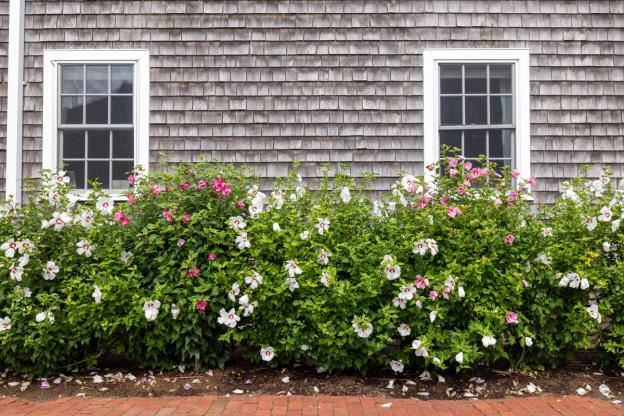
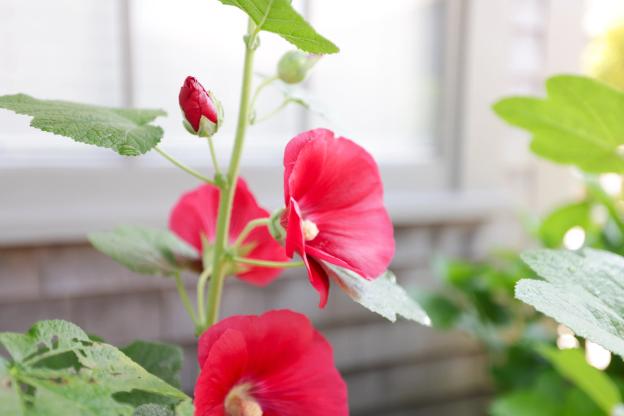
Also blooming in August, Rose of Sharon is a tropical-looking flower that grows wonderfully in Nantucket. Although the plant is considered to be invasive, it can be grown as a bushy shrub, hedge, or trained as a small tree. Other vibrant flowers that are commonly spotted in August are phlox, which form dense, moss-like mats with pink, purple, or white flowers, and hibiscus (mainly the native swamp rose mallow), which is another tropical-looking large, showy wildflower with pink, white, or rose blooms.
September: Late Summer Meets Fall
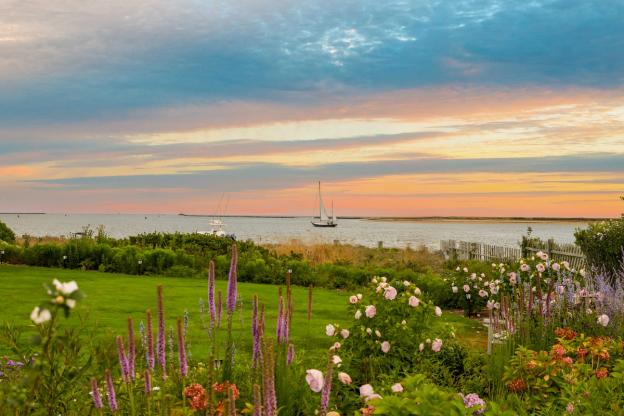
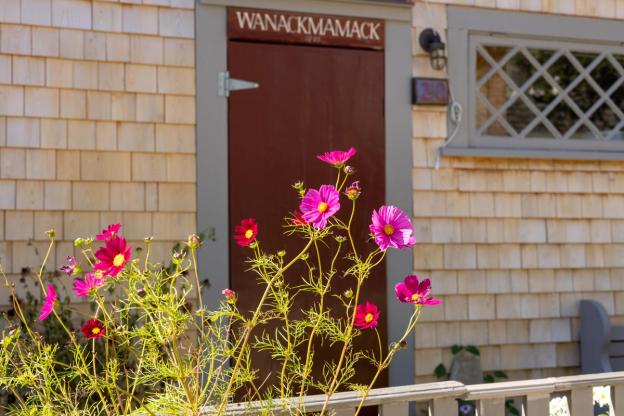
Because of the island's maritime climate, many summer flowers linger longer than on the mainland, with blooms being warm-toned and textured. One of these flowers is pink sedum, which thrives on Nantucket, fitting well with the island's sandy, well-drained soils. Asters are another flower that's abundant during the late summer and fall, adding vibrant colors (like blue, yellow, purple, and white) to grasslands, moors, and roadsides. These flowers serve as crucial late-season food for pollinators and birds.
Another flower that adds a pop of color to the island is the morning glory, which has certain varieties that are native to Nantucket, like the island morning glory and the beach morning glory, which both love sandy soils and coastal conditions. These flowers often last longer in cooler weather before frost.
October: Subtle and Beautiful
In October, nature shifts from bright blooms to warm foliage. Plants like goldenrod and asters, which begin to bloom in the months of August and September, continue to flourish during October. Montauk daisies are one of the signature October blooms that peak during the middle of the month, producing big white flowers that are deer-resistant. They can be found in landscaped gardens, but also in places like the Nantucket "Serengeti" (middle moors) and lower areas like Squam Swamp.
Marigolds appear on Nantucket in various contexts: while they appear as traditional garden flowers, they are also used as themed decor for holidays like Day of the Dead, where they are used for their cultural significance. Marigolds have even been used as inspiration for cottage designs at places like the White Elephant Resort, fitting the island's floral, colorful, yet classic vibe. Marigolds are also known as the birth flower of October.
Popular in many places during the fall time, mums are considered a quintessential fall flower on Nantucket, featured heavily at places like Bartlett's Farm. These days, Bartlett's Farm grows about 4,300 mums of different sizes for the fall season on-island, in colors like white, orange, bronze, pink, and yellow. Mums have a hard time surviving once the first frost hits, so these plants are really only here to stay for the fall!
November - February: Winter's Quiet Beauty
The winter months are the island's quietest bloom period, and while there aren't "flowers" in the classic sense, there are still some plants that remain visibly active throughout this cold time period. Most of these plants are evergreen, including bearberry, which can best be described as low mats of glossy green leaves with bright red berries, and bayberry, which has blue-gray waxy berries that are highly characteristic of Nantucket's moors.
Other evergreen that provides structure in the moors throughout the winter is pitch pine and scrub oak. Pitch pine is hardy tree that provides bats and birds with shelter, but is unfortunately threatened by the invasive southern pine beetle and Nantucket's pine tip moth. Scrub oak is a gnarled shrub or small tree that creates dense thickets in otherwise barren habitats, providing crucial shelter for wildlife.
One plant that adds a splash of color to the winter scenery on-island is winterberry holly. This common shrub is native to Nantucket and is known for its brilliant red berries in winter that attract birds. It can typically be found in wetland edges around the island, and can grow up to 12 feet tall!
The Island in Every Season
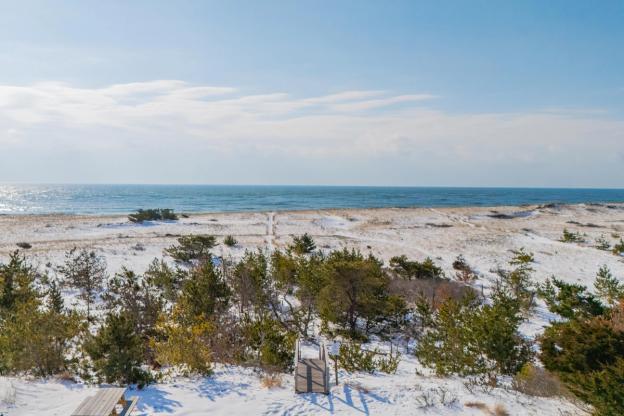
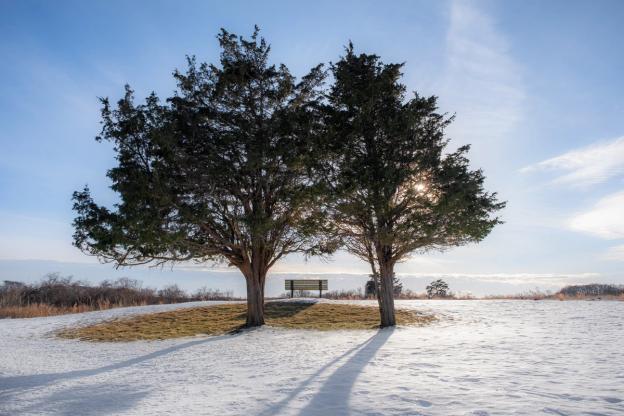
Across windswept moors, garden-lined streets, and sandy shores, Nantucket's blooms offer a wide variety of colors and details to admire across each season. No single month holds all the beauty - so whether you arrive for the daffodils, hydrangeas, or the stillness of winter, you'll find that Nantucket always has something beautiful waiting to be discovered.