


Home Inspections on Nantucket
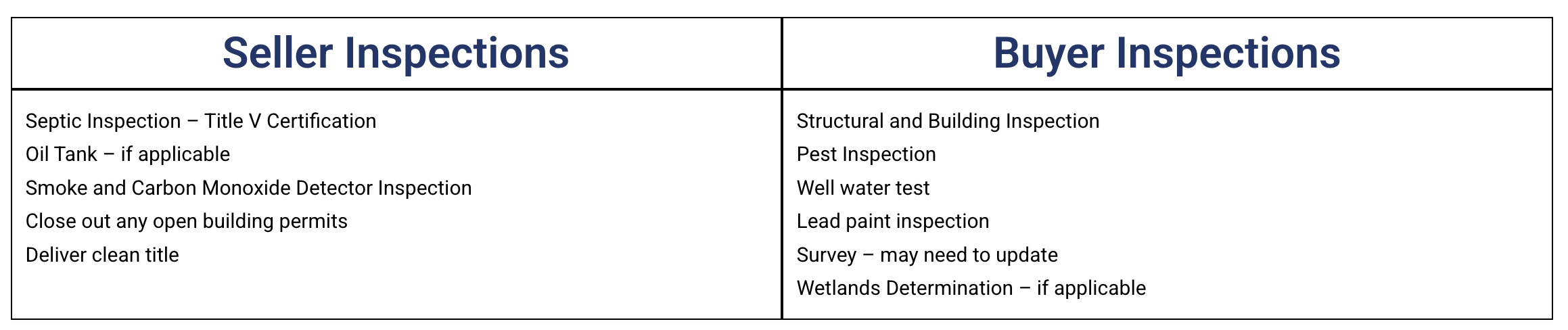
Below is a list of typical inspections or due diligence tasks that a Seller and a Buyer may need to do. Please note that some may or may not apply depending upon the particular property.
Guide to Home Inspections
What is a Home Inspection?
A home inspection is a visual evaluation of a home's structure and major systems. It typically applies to residential properties with one to four units.
During the inspection, a licensed home inspector examines the visible and accessible parts of the home, including:
Roof and attic
Walls, ceilings, and floors
Windows and doors
Basement and foundation
Heating and air-conditioning systems
Interior plumbing and electrical systems
The purpose of a home inspection is to help buyers better understand the condition of a property and identify potential issues.
However, it's important to remember that a home inspection has limitations. Because inspectors can only evaluate areas that are visible and accessible, they cannot identify every possible issue or hidden defect. The inspection helps reduce risk, but it cannot eliminate all risks associated with buying a home.
Home inspections are not intended to point out every small problem or any invisible or latent defect in a home. Most minor or cosmetic flaws, for example, should be apparent to the buyer without the aid of a professional.
Although a home inspection gives an overall assessment of the home's condition, it is not:
A property appraisal
A building code inspection
A guarantee or warranty
An insurance policy on the condition of the property
When Does the Home Inspection Happen?
Home inspections are typically scheduled after an offer to purchase has been accepted but before the final purchase and sale agreement is signed.
Before signing an offer to purchase, buyers should make sure the contract includes a home inspection contingency clause. This clause makes the purchase dependent on the results of a professional home inspection and outlines the rights and responsibilities of both the buyer and the seller.
How to Choose a Home Inspector
Good ways to find a qualified home inspector include recommendations from:
Friends, family, or neighbors
Attorneys or mortgage brokers
Online searches through the state licensing database
Home inspectors in Massachusetts must be licensed by the state. Always verify an inspector's license before hiring them.
Consumers should not rely solely on "certifications" from private organizations, since these may not include official licensing.
You can verify a home inspector's license through the Massachusetts Division of Professional Licensure website by entering the words "home inspection" and the zip code of the community where you are purchasing the dwelling. You can also check local Yellow Pages where many advertise under “Building Inspection Service” or “Home Inspection Service.”
Real estate agents are generally not allowed to recommend a specific inspector unless they are acting as the buyer's broker, but they may help provide resources for locating licensed inspectors.
Homeowners may also choose to have an inspection performed before listing their home for sale to identify potential issues in advance.
What to Expect from the Inspection
Although it is not required, buyers are encouraged to attend the home inspection. Being present allows you to:
Ask questions directly
Learn how to home's systems operate
Understand maintenance needs
Better interpret the inspector's written report
To help the inspector do their job, the property should have safe access and adequate lighting in areas such as basements, attics, and crawlspaces.
After the inspection, the inspector will provide a written report summarizing the findings. The report should outline:
Visible issues or concerns
Areas that may require repair
Possible risks of hidden damage
Recommendations for further evaluation if needed
Additional Inspections to Consider
A standard home inspection does not cover every potential issue. Buyers are strongly encouraged to consider additional specialized tests before completing the purchase.
These may include inspections for:
Lead paint ( click here for information on Massachusetts Lead Law)
Drinking water quality
Wood-destroying insects (such as termites or powderpost beetles)
Indoor air quality, including radon gas
Mold, fungi, and allergens
While some home inspectors are qualified to offer these services, these inspections and tests are not part of the basic home inspection and should be contracted through qualified licensed professionals (of your choice and hire) in those fields.
Filing a Complaint
Most home inspectors conduct their work professionally. However, if you believe a licensed home inspector has failed to meet professional standards, you may file a complaint with the Massachusetts Division of Professional Licensure.
Complaints can be submitted to the Division's Office of Investigations in Boston or through the Division's website. The Division’s Office of Investigations is located at 1000 Washington Street, Suite 710, Boston, MA 02118. The phone number is (617) 727-7406. A copy of the complaint form can also be downloaded from the Division’s website ( www.mass.gov/dpl/).
It's important to note that dissatisfaction alone not necessarily evidence of misconduct. The Division reviews complaints to determine whether disciplinary action is warranted.