


Discover Nantucket's Most Historic Places
01/20/2026
From its cobblestone streets and weathered gray shingle homes to its centuries-old lighthouses and whaling-era landmarks, Nantucket is a living picture of American history. Once the whaling capital of the world, the island has a rich past that is well-preserved today. Exploring Nantucket’s historic places offers a journey through time, and a deeper appreciation of the island’s spirit. Here’s a look at some of Nantucket’s most historic places.
Old Jail
In 1805, Nantucket taxpayers spent $2,090 to build a new jail, called the “ New Gaol”, after the first jail on the island (built in 1696) was not considered to be sturdy enough. Both of the jails were built on Vestal St. (or Prison Lane, as it was known), with the newer jail being made of massive oak timbers and iron bolts running the length of its walls, as well as iron rods across its windows, and heavy wooden doors that were reinforced with iron. Due to its solid build, prisoners were forced to come up with creative escape plans. One 15-year-old boy crawled out of the chimney flue, while another prisoner had a key delivered to his second floor window by a woman using a block-and-tackle rig. Petty crimes, including thievery, were the most prevalent offenses in Nantucket, in about equal numbers to imprisonment for debt. The jail housed its last prisoner in 1933, and was eventually closed and transferred to the Nantucket Historical Association in 1946.
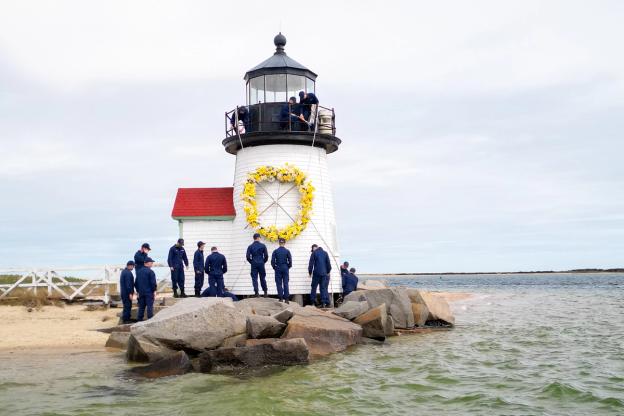
Brant Point Light Station
The Brant Point Light Station is America’s second-oldest light station (behind Boston Light, built in 1716). The structure has a long history of destruction and rebuilding:
1746: The station was first built.
1757: The station burned down (most likely the result of an oil fire).
1759: A second wooden tower was built.
1775: The tower was blown down in a storm that also destroyed many other buildings on the island. That same year, a third wooden tower was built, which was paid for by a tax on shipping coming into the area. All vessels of 15 tons or more were charged six shillings at the time for their first coming or going each year.
1783: The tower was burned down, once again. That same year, a temporary light was created by putting a lantern between two spars.
1786: The temporary light was burned down. That same year, a fifth light was established.
1788: The fifth light was wrecked by a storm. The next lighthouse was built by the Commonwealth of Massachusetts. This was the same year that the town changed its name from Sherburne to Nantucket.
1812: The light was extinguished during the War of 1812.
1856: A brick tower was built and served as the front light for the Nantucket range lights. This tower still stands today, minus its lantern, and is part of the U.S. Coast Guard Station Brant Point.
1901: The current tower was built. It is the tenth structure at this location and is known for its “salt-shaker” style.
1983: The entire Brant Station Complex was renovated by the Coast Guard.
Present Day: The lighthouse is on the National Register of Historic Places, and is still in operation, maintained by the U.S. Coast Guard.
Jethro Coffin House
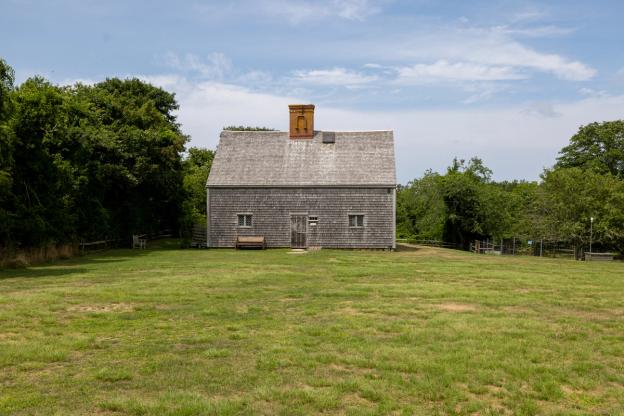
Also known as “The Oldest House”, the Jethro Coffin House holds the title of being the oldest house on Nantucket still standing in its original site. Originally built in 1686, the island’s population at this time totaled several hundred, and the native Wampanoag outnumbered the English population by at least three to one. The house was built as a wedding gift for Jethro Coffin and Mary Gardner, who were both members of two of the island’s oldest families. The house was built on Gardner land using Coffin wood, representing the unity between the two families. In the late nineteenth century, the house was abandoned, but a Coffin family reunion in 1881 renewed interest in the property. The Nantucket Historical Association eventually acquired the house, and four years later, the Society for the Preservation of New England Antiquities
commenced an extensive reconstruction in an attempt to return the house to its historic appearance. In 1987, the house was struck by lightning, requiring substantial repairs and partial reconstruction to the roof and chimney. Nowadays, you can step foot inside the house to get a glimpse of what life was like for the Coffin family in 17th-century Nantucket.
Miacomet Indian Burial Ground
The Miacomet Indian Burial Ground, located on the west side of Surfside Road, is a preserved historical Native American burial site. It contains the graves of many Native Americans, particularly those who died during the devastating “Indian Sickness” - an epidemic that killed 222 people during the fall and wintertime between 1763 and 1764. When the epidemic came to an end, there were roughly only 150 survivors among Nantucket’s Wampanoags. Due to the lack of headstones and fencing, this site became obscured by brush for many years, until it was rediscovered in 1987 during excavations for a housing development. The construction was stopped and relocated. It is the preference of today’s Wampanoag elders that there should be no informative signage at the burial ground beyond the simple boulder with its name. Nor do they want walking tours or school field trips to the site. They simply want it fenced, maintained, and left in peace.
Old Mill
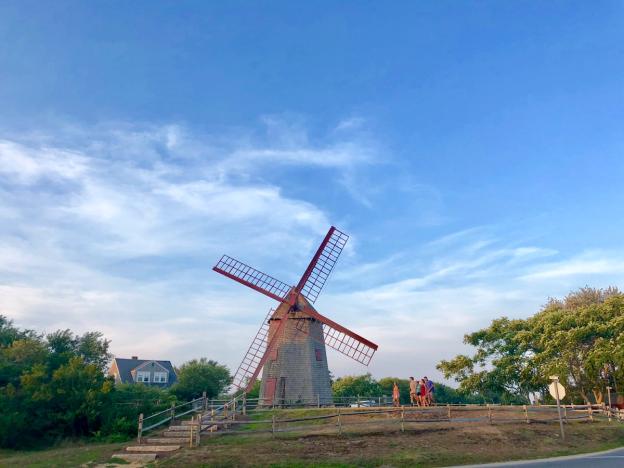
Said to have been built in 1746, the Old Mill is believed to be the oldest operating windmill in the United States. Out of the original five mills that once stood overlooking Nantucket, it is the only remaining one. The Old Mill was used for many years until it was eventually sold to Jared Gardner for twenty dollars in 1828, for use as firewood due to the mill’s poor condition. Gardner, a carpenter, decided to instead restore the mill to working conditions capable of grinding corn. 38 years later, the mill was sold again to John Francis Sylvia, a Portuguese miller of Azoeran descent, who operated it for many years with his assistant Peter Hoy, until it fell into disuse in 1892. The mill then went up for auction in 1897, where it was sold to The Nantucket Historical Association for a bid of $885. There have been minor repairs to the mill over the years, as well as major overhauls in 1930, 1936, and 1983, but the mill is still capable of grinding corn today, just as it had for over two centuries.
Learn More About Nantucket's Past
In addition to the places listed above, Nantucket offers several other wonderful ways to learn about the island's rich history, especially its maritime and whaling past.
Nantucket Whaling Museum - Featuring permanent and rotating exhibits in nine premium galleries, with over a thousand works of art, artifacts and treasures on display, the museum tells the island's fascinating stories over four centuries. The museum is home to a 46-foot sperm whale skeleton, a massive Fresnel lens, a restored 1847 candle factory, and a relaxing, fully-accessible rooftop deck offering stunning views of Nantucket harbor. To learn more, click here.
Walking Tours - Walk through historic downtown Nantucket with a guide from the Whaling Museum, and be transported on a journey through Nantucket's past. Learn about the rise and fall of the whaling industry, the rise of tourism, and the impacts the island's economy had on social and racial development on Nantucket. To learn more, click here.
Museum of African American History - Located in the only public building constructed and occupied by African Americans in the 19th century that's still standing on Nantucket, this museum connects you to inspiring, authentic representations of life in the 18th and 19th century. It showcases the powerful stories of black families who worshipped, educated their children, debated the issues of the day, organized politically, and advanced the cause of freedom. To learn more, click here.
Nantucket Shipwreck and Life Saving Museum - An affiliate of Egan Maritime Institute, this museum is dedicated to honoring Nantucket's history of shipwrecks, lifesaving, and rescuers. Founded in 1968, it's the first museum in America dedicated to the lifesaving service. The museum is located at the edge of Folger’s Marsh, and the public is welcome to visit one of the most scenic sites on the island for the view, to enjoy a picnic, or watch the variety of birds interacting on the marsh. To learn more, click here.
MMA Hinchman House Natural Science Museum - A favorite Nantucket location for kids, adults, and everyone in between, the Maria Mitchell Natural Science Museum is a cross between a classic natural history museum, a zoo, and a science center. It's a great place to learn about the plants and animals of Nantucket (through hands-on activities and live animals), as well as how Nantucket came to be an island. To learn more, click here.
Hadwen House - The Hadwen House is a Greek Revival mansion built in 1846 by whaling merchant and silver retailer William Hadwen at the peak of Nantucket’s prosperity as the whaling capital of the world. In 1964, it was opened to the public as a house museum, and today continues to host visitors. The Hadwen House currently has various exhibitions on display exploring Nantucket lightship baskets, decorative arts, as well as historic Nantucket maps. To learn more, click here.
Visit more of the Nantucket Historical Association's properties - For a list that includes additional NHA's properties that were not discussed above, click here.
An Island Rooted in History
Nantucket's history is woven into nearly every corner of the island. Exploring these places of the past offers a deeper appreciation for the people, traditions, and stories that shaped the island into what it is today. Whether wandering through preserved streets or stepping inside a historic museum, visitors leave Nantucket with a stronger connection to its enduring heritage.